
Quadir Copeland Scouting Report
Natural guard skills at 6-foot-6. With top role versatility, Copeland's ready to fill an immediate need in the NBA. Here's everything you must know about his role and long-term potential:

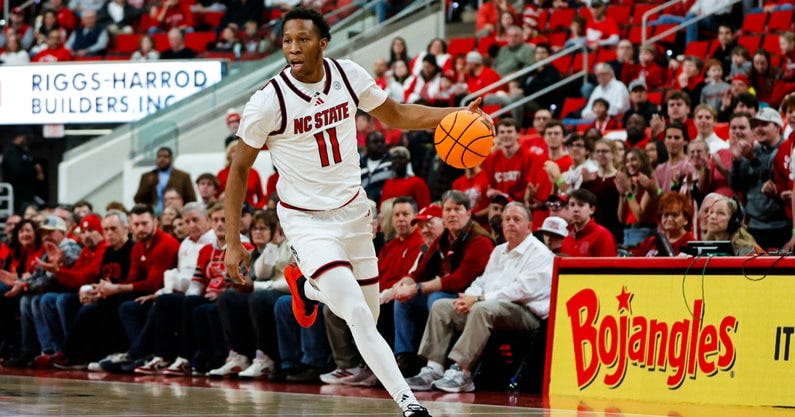
Quadir Copeland (#11, NC State): Senior, 6’6”
Point Guard/Shooting Guard — Born:
Introduction
Opportunity to play often decides a highly talented prospect’s faith. However, it’s all about how they respond to things going south quickly. Copeland hasn’t had the best two years at Syracuse, whereafter he committed to Coach Wade and McNeese State. That’s the season that changed everything for him. He played his natural position, showcasing his crisp skill, physicality and natural toughness. He’s everything today’s NBA looks for in guards with positional size and role versatility.
With Copeland continuing to flourish in the same role for an ACC contender adds ton of value to the sample size. However, it’s not all about production and highlights. The underlying differentiator is the level of skill and him expressing it while playing within the boundaries of his role. At an ultra-efficient close-to fifteen points per game, we see good returns so far. The emphasis of this scouting report is to focus on his NBA role and show why he should be a highly-touted prospect in the 2026 NBA Draft.
Physical Profile
While listed at 6-foot-6, the Philly-born is one of the most creative prospects in this class. He’s filled his frame well in the last few years and has a tremendous core. Not the broadest of shoulders, but has good upper-body strength and crisp footwork. But the natural toughness and fluidity is the big differentiator in his physical profile. At 220 pounds, there’s still room to add weight and grow more muscle in the next few years.
There’s no listing available, but Copeland has serious length. I think his wingspan will measure out at close to seven feet. With a good first step and decent lateral quickness, the speed is also a positive to mention. Combined with his finesse and skill-heavy style of creating advantages, the unpredictable nature adds more value to the physical tools.
At over 275 (!) articles in 3 years, Ersin’s NBA Draft Newsletter is your go-to for draft content. Make sure you subscribe for much more!
Defense
Pick-and-roll
Copeland has great positional awareness. That’s leading to him making a difference as a pick-and-roll defender. At least in potential. The other side of the coin is that he’s not showing the best screen awareness nor navigating through the ball screens during the action. The first play shows Copeland dropping to counter rim pressure, as NC State was keen on letting their opponents shoot. After the forced switch, we see Copeland immediate rotate and cover the lane and shooting angle with his length. The second play shows the maturity and experience in his profile. The opposing ball handler tries to isolate Copeland early by dropping the pace. Copeland saw a potential high ball screen incoming, and suddenly dropped. Good decision, but he didn’t locate running into the ball screen, where he got locked up, giving the shooter a free spaced shot. It’s a combination of ball-watching and shaky decision-making.
But no real red flags. He’s mature, reads offenses well and does well to map the court as a defender. The positive part is that he’s sliding his feet very well, using lateral speed to stay in front of ball handlers, immediately using his length to close angles around him. The third play shows an example. The other side of the coin is that a lack of a true good last step led to him being pushed out of balance when the ball handler picked up his dribble, causing a teammate having to hack to take away the free finish. The fourth play shows Copeland drop a bit too far, as he closed out while the shooter already set for the catch-and-shoot from above the break. Overall, there’s potential for Copeland to be a neutral pick-and-roll defender with how well he’s positionally orientated. The area of attention is to improve his screen navigation. Not from a strength perspective, but from a screen awareness one and navigating through picks earlier in the process.
Closeouts
Copeland looks lost sometimes when he’s not defending the primary ball handler. That’s hurting him in the closeouts. The first two plays show examples of bad positioning and awareness to the cut from his assignment to not being near 180 degrees in his closeout in the second possession. Those are not major red flags, but it says that his processing needs to improve. The positive is that most of the problems are caused by his tunnel vision. He’s keeping most focus on the ball, and less on his surroundings. That’s not helping him to adapt to a motion-based NBA game with constant movement and switches.
The third play shows a critical mistake in crunch time. Copeland’s again caught ball-watching, losing control over his corner and thus forced to close out not at 180 degrees and giving away the weak side baseline. It led to the foul with a chance for the opponent to take the lead in the game. But the positive part is that the natural toughness never regresses. He’s locking up the entire angle and the five-man himself in the baseline out-of-bounds play in the last possession, making the dropoff pass not possible, eventually leading to his defensive playmaking turning to transition offense. But as of now, the positives aren’t enough to compensate for the ball-watching problems we see in his profile. That’s the biggest area of attention for his senior season at NC State.
Post-ups and interior physicality
Regardless, the role versatility is clearly in Copeland’s profile. He’ll comfortably match defending against wings making plays inside out. The first possession shows his upper body absorbing contact, not giving entry to the paint, forcing the post-up scorer to seek his chances via the jumper. It gets better when considering the positional awareness is much better when Copeland is busy being physical inside the paint, leading to various deflections and intercepting passing lanes. At over a 2.5% steal rate and 1.2 steals per game for three seasons in a row, the numbers also show positive returns. Staying active and busy keeps his motor running, whereas the lack of pace led to less focus in perimeter-oriented plays. Not a red flag by any means, but an observation for NBA scouts to keep in mind when evaluating him. But an area of attention is yet again the last step. He’s bumped out of his spot in the second possession while pivoting when badly balanced. Not a red flag, but a sign of improvement for his defensive footwork.
Subscribe Now!
Offense
Shooting off the catch
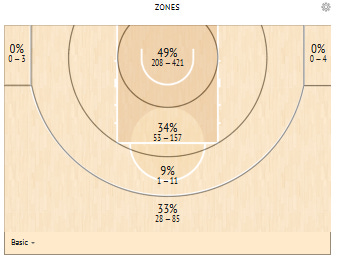
Copeland has been a low-volume shooter for his entire collegiate career. That’s making the 54.2% on the season anywhere near sustainable. However, he’s consistently getting into the same process with good footwork to start with. The first play show the defense following the scouting report focused on taking away his creativity off the dribble. He pivots right, but not setting his feet at 180 degrees. That’s keeping the help defender alert, as he still keeps the threat of the pass alive. He’s not naturally rising up for the shot, as he wasn’t fully in balance. But I don’t see how this is a negative in his profile compared to so many shooting-focused wings and guards.
His value on the floor is the gravity as a wing-sized playmaker and creative scorer. He has tight handles and thus the only value of his three-point shot is to gain gravity for the rest of his game. He’s pivoting with his right on the second and third plays below. He’s bending his knees a bit too far, having to power out and take more time on his jumper. But the high-arcing point is promising, at least if it’s always high.
He just needs to follow up on his good feet in getting his mechanics to something he can consistently use. As of now, the issue is that he’s powering the ball of his hands, rather than a natural release. The fourth play below shows an example. He’s pushing the ball in his chest before he’s pushing the ball of his hands. The arching point was much lower this time. Therefore, the numbers have zero to no value and Copeland should be considered a raw shooter rather than that part of his game being ready to plug him into an NBA role.
Creation out of post-ups
But in terms of creativity, handles and playing the angles the right way, there aren’t many players better than Quadir Copeland. He’s the real deal in getting advantages and drawing the entire defense’s attention when he’s in the interior. The first play shows his version of booty-ball, with him bumping into the defender, keeping his balance and showing crisp footwork before he got a clear and-one opportunity. At 5.1 free-throws per game so far this season, he’s consistently getting to the charity stripe, finishing over 75% of his tries there. The best part is that NC State lets him isolate more, as he’s leading them to a lot of space for the shooters around him.
The second play shows him pivot out wide and using the contact to again get both feet inside and seeking the dropoff pass and multiple paint touch. But he’s fouled and nearly got another and-one. He’s not seeking a power battle, but baits defenders into his creativity where his angle creation comes from his footwork. He has a traditional aspect in his advantage creation to where he’s ‘outhooping’ defenders who can’t recognize what his feet will do next.
The best part is that he’s keeping the ball high, using both shoulders to finish from. Playing with his angles in changing pace and letting his handles work for him. Great hip mobility in the third play below, drawing contact and finishing while both feet are in the paint and he’s surrounded by help defense. His way to keep the ball high on angle creation is again at display in the fourth possession. The NBA seeks more post-up creators in the NBA, but the combination of tight handles and natural creativity at a high level are not easy to find. That’s the biggest part of his value for the NBA, as the level of skill always prevails, and that’s where Copeland has a clear advantage over most of his peers in this class.
Slashing and making plays out of closeouts
At 66.1% at the rim without dunks, Copeland shows tremendous touch at the rim. The context here is that he’s surrounded by defenders and mostly creates his own looks with two feet in the paint. That adds value to the number. As we saw in him working the post, Copeland shows his tight handles and creativity in playing with both pace and his handles to get angles when he’s creating out of closeouts. The first play shows an example of him attacking the defender’s feet first before putting his body in the chest and finishing the and-one opportunity. But when he’s not getting the angle to drive, passing out of these is a much better decision. He’s still not a consistent shooter in terms of process. So the second play is something he shouldn’t do too often as it’ll pressure a team’s offensive rating when the threes he does take off the dribble aren’t good ones.
But that’s very feasible to improve. The natural skill and the way he’s mastering his body and athleticism are hard to find. The third and fourth play shows how high his IQ is and how insanely good his angle creation is. He’s playing with the positioning of the ball and his pace before the last step and creates unbalanced defenders to bump into. He’s not crashing into people, as his crisp footwork keeps him in balance, but he’s very good at getting to the chest and putting defenders in foul trouble. He won’t iso score for large chunks in a game, that’s not what NBA teams need in the regular season.
But the playoffs in the NBA show what NBA teams seek from their guards and wings: high level isolation play when needed. The NBA is a game of coaches countering each other’s plays. So when it all matters, it’s all about letting creativity and angle-creation go do what they do best. Copeland is one of the best options in the class on that end. Considering his status as a vital starter at NC State, it’s safe to say Coach Wade has recognized the talent and applied it to a winning situation all way back to their days at McNeese State.
Passing, ball-moving, and playmaking
At close to 24% usage, it’s safe to say Copeland has his fair share of touches and opportunities to create. That’s making his passing chops even better in terms of the numbers. He’s averaging close to 6 dimes versus 2.5 turnovers in a game while taking good care of the basketball. That’s the icing on the cake. He can average four turnovers per game, and I would still determine it the same way. His advantages lead to multiple defenders rotating and forced to make decisions. That’s what gives him the edge in the playmaking battle. He’s composed, in control and lets his creativity work for him. We’re in the era of teams seeking jumbo initiators, and Copeland’s giving them a clear example of why he should be in that category.
Whether it’s him switching and using his size to create mismatches against other guards in the first play, or him seeking and scanning the floor while the rest expects his dribble penetration in the second. The composure leads to angles opening up for Copeland and he’s simply executing them at a consistent rate. He’s not driving without a plan, but plays the game like we see in the NBA—by forcing switches.
The third play shows another example. He’s creating easy reads for himself to execute, using his creativity and paint touch generation by craft and skill as his main weapon. He’s not a volume shooter, or a good shooter by any means and he still forces defenders to drop against him. That’s a value riser, as he’ll eventually figure NBA range and consistent mechanics out and at least will increase his volume. The fourth play shows good instincts in the pick-and-roll as well. Shakes his defender out of balance, and the rotating five has to switch after the ball screen. He’s gathering to keep the dribble alive, but immediately sees the angle in the middle with a crisp pass to the roller. The natural skill is seen with the way he’s manipulating with his eyes. Great ball reversal with the no-look in the fifth play below, while he’s leveraging open shooters on the weaker side to surprise the defense with the post-entry pass in the last possession.
It took a few years, but the natural skill has gotten Copeland to embrace a certain role that NBA teams desperately want on their depth chart.
NBA Draft Projection
Quadir Copeland has been one of the most fun evaluations I’ve had in the draft cycle. It’s refreshing to see him keeping his natural creativity and hooper’s mentality while changing his role over the years. The composure, handles, elite angle recognition are clear positives in his profile.
However, the other side of the coin is that he’s not good defending against motion, ball-watches and doesn’t show consistency in closeouts. On top of the lack of shooting, it makes his role very context-reliant to even see NBA minutes early in his career. That lowers the value.
Regardless, I expect NBA teams to be all over him in the draft. He’s a solid second-round draft selection with a chance to sign a guaranteed deal depending on how his game and role adds to an NC State team that wants to compete in the NCAA-T and try to win the ACC this year. Considering his senior status, production, winning and role versatility matters even more.
At over 275 (!) articles in 3 years, Ersin’s NBA Draft Newsletter is your go-to for draft content. Make sure you subscribe for much more!