
MJ Collins Scouting Report
After writing in-depth about Mason Falslev and Adlan Elamin, I wanted to continue by another Utah State Aggie who caught my attention. He has everything to be a long-term rotational NBA guard:
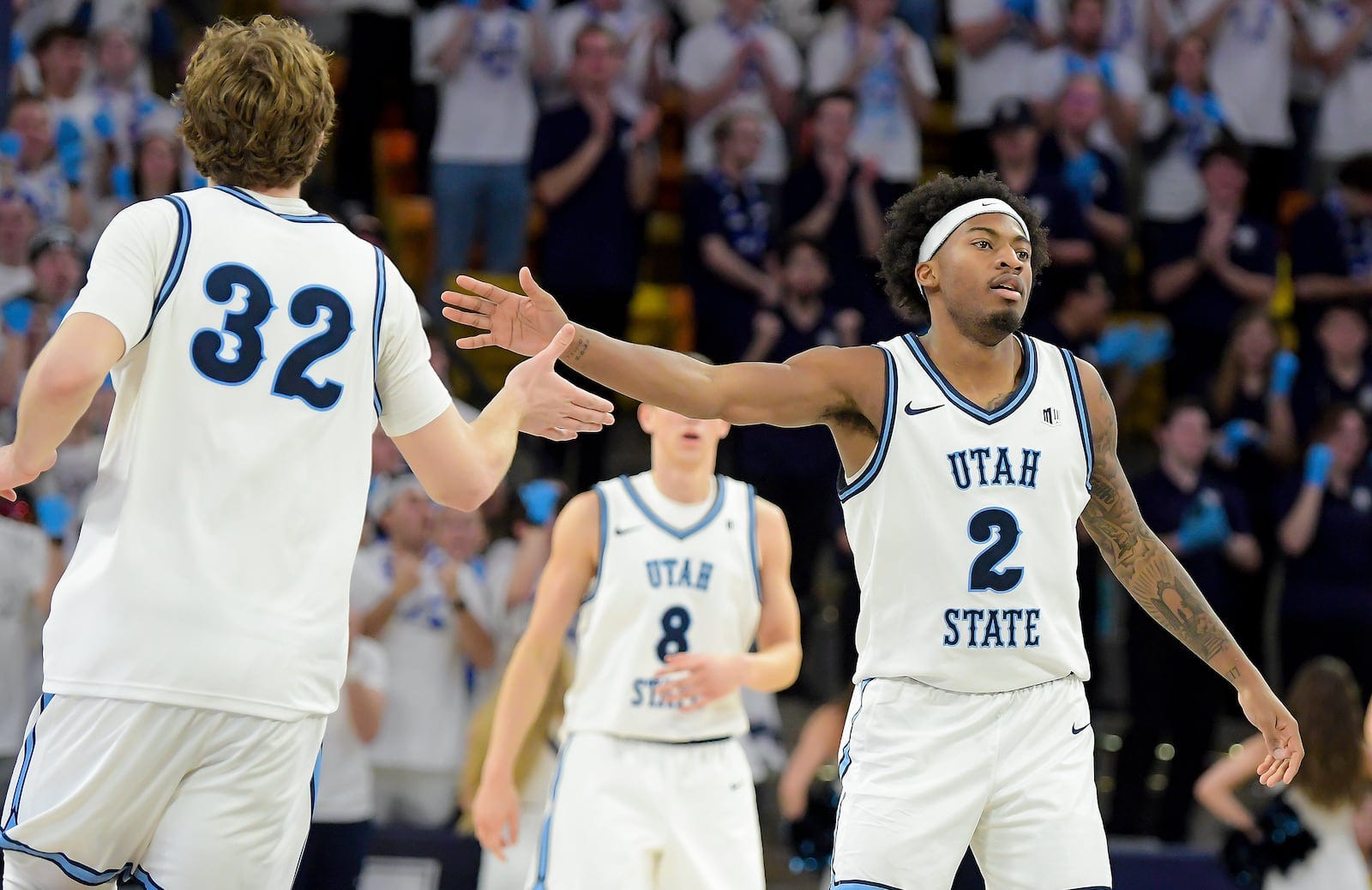
#2 MJ Collins, Utah State: Senior, 6’4”
Shooting Guard — Born: Aug 16, 2003 (22 years old)
Introduction
After a efficient 17.5 points-per-game season, Collins earned All-MWC honours as a senior, ending his NCAA career with a strong performance in the NCAA Tournament. He’s been a back-up for the majority of his career, but Coach Calhoun and the Aggies used him to his strenghts and Collins has shown he’s a potential long-term guard at the next level.
The league is all about the right context, and that’s where Collins’ complementary, yet productive game has answered many needs. I’m confident when saying he’ll grow into a long-term back-up guard who’ll play winning NBA basketball in his career. The exact role and how he’ll grow into it is the main emphasis of this scouting report.
Physical Profile
At 6’4”, Collins is a strongly-built guard with broad shoulders and a well-filled frame. He’s listed at 195 pounds, and stands out with his strong upper body and having a good core. He’s a scrappy guard with a consistent motor and plays with constant energy. While being a good athlete, Collins’ impact is mostly with his combination of physique and lateral speed that makes him a reliable defender in space.
Overall, he can continue to bulk up and be a power guard in the NBA. He doesn’t stand out much with his verticality, but mostly with his decent first step and even better lateral pace. Has some good footwork as well. There’s no listing of his wingspan available, but my best guess would be that it’s +4 or +5 inches.
At over 350 (!) articles in 3.5 years, Ersin’s NBA Draft Newsletter is your go-to for draft content. Make sure you subscribe at $6 per month/$60 per year for much more!
Defense
Pick-and-roll
At 1.5 fouls per game, Collins plays perfectly under control. He has that New York-style positive ‘F-you’ attitude which I adore. He’s super-tough and he slides his feet very well. However, his will to make winning plays can get the best of him with the first play below as an example. Despite the foul given up there NBA teams will like the tenacity. That’s the second play in a nutshell as well. His toughness to fight through that screen that forced the switch was impressive, but his focus on the ball handler’s not been good for his screen awareness, which is the main area to focus on for him at the next level.
Regardless, footwork and decision-making both prevail. The third play was another example of how his toughness and quickness make a difference on defense. He’s getting through the screen to where the ball handler got loose and settled for that jumper from above the break. The shot-clock was winding down and Collins knew he had to overextend his pivot and launch his way to contest that shot, whereafter he collected the board. His way of balancing his body out even when he slips is impressive, with the fourth possession showing another example.
He has everything to be a game-changer in pick-and-roll coverages for the next level. The fifth play shows him use his arms to tag the screener, slide in between and slide his feet tremendously while moving laterally. His upper-body strength and footwork led to him completely outbalancing the scorer, igniting his team’s transition offense. Collins’ impact on the defensive end is a big value-riser for his profile.
Closing out on shooters
Collins’ closeouts are mostly him trying to limit angles. He has a ‘beat me off the dribble’ type of approach where he’ll give up a bit of space, but use his length to limit angles and be quick to contest when shooters do decide to utilize the space. The first possession shows such example. Overall, he has to work on his rotations a bit more, ensuring he’s moving timely to take over assignments with the second play leading to an example of him being too late to contest the corner shooter’s wide-open three.
Overall, Collins’ intensity is at a high level, but the rotations overall forces him to play this way as he’s a bit late to his spots. The third play shows another example, the corner shooter forced the rotation and Collins had to immediately walk when his teammate left that assignment for Collins to rotate to. The fourth play has him at the right spot already and when that’s the case his shot contest is solid consistently. But being late to those rotations is the summary for his closeouts with the fifth play as an example.
The NBA’s higher pace might lead to some issues early in his career, but it’s no red flag by any means to his profile as NBA teams teach rookies early how to deal with the better spacing as the toughness and intensity matter a lot more.
Cuts and defending away from the ball
Being late to rotations summarizes Collins’ game when seeing past the high motor and intensity. The first play had a clean look at a good deflection with the passer’s high risk. He’s under a 2.0% steal rate in each of his four seasons, and it’s easy to see why that’s the case. The second possession shows the rim pressure whereafter Collins is getting backdoored on the weak side leading to a late reaction where he couldn’t stop the dunker’s finish in the paint.
We see a similar outcome in the third play below to where Collins’ ball-watching above the break has him not tagging the assignment he switched to. He should have tagged because the cutter could have had a easy backdoor that he didn’t utilize, whereafter he’s covering the weak side on the fourth play to where the ball reversal eventually leads to the weak-side cutter being the finisher while Collins shows a late reaction to the motion around him. The issue at hand that needs work in the NBA is that Collins needs a tag too hard and he’s not focusing too much on his positioning.
The fifth play shows him look for the assignment with his right hand to where he couldn’t find him, lost control and got burned off the weak side backdoor cut. The defense away from the ball needs work for Collins to use his intensity and high motor as clear value-adders instead of the compensating factor for his lapses—which is the case now.
Subscribe Now!
Offense
Self-creation out of pick-and-roll
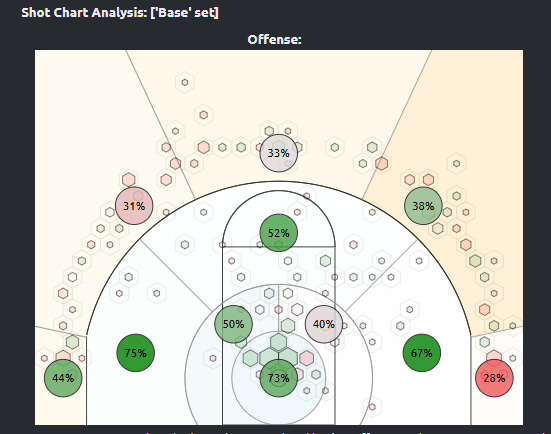
The sell is clear. Collins is a secondary ball-handler with the poise and angle-recognition to be a two-way scorer for himself inside the lane. He’s at a made dunk per game while finishing on 69.3% of his 127 attempts at the rim without dunks. On top of that, he’s lethal in his decision-making, playing the angles to perfection. At close to 70% of his made midrange jumpers are self-created, and he’s at a 49.4% clip from there. That’s simply elite. The NBA playoffs have shown how much self-creation and creativity matter to answer to good schemes from the opponent. Collins fits that bill immediately.
He has decently-tight handles and tremendous footwork. He extends and lands a great pivot on his spin-move in the first play below. It was a bit too rich to finish against three opponents, but Collins’ space-creation is at a high level with this play as an example. The second possession shows him use his body control again before spinning, pushing the defense deeper in the paint and finish with his off-hand. The main emphasis here is that he needs to pass out of these advantages in the NBA. That’s the still the finishing touch in his profile. The tunnel vision to score needs to be reduced in the next few years.
The emphasis has been focusing on his misses. That’s where the evaluation has most value. That San Diego State game was a rough one in terms of his rim-efficiency, as the Aztecs schemed against his rim pressure. That’s why these three plays below are the main examples of showing how lethal he can create angles and space, but how the decision-making to utilize that is still poor. No issues regardless, as his self-creation is a big value-riser for his NBA profile.
Shooting off the catch
The interior is Collins’ kitchen where the Aggies just ‘let him cook’. However, as a shooter he’s more of a complementary piece and that’s the perfect combination to serve and play as a off-guard in the NBA. At 89.6% assisted three-point makes, he’s shooting a solid 36.1% from downtown. That’s a feasible number to work with. Collins is not a lights-out shooter by any means, but the jumper is fluid and consistent and the most important part is that he’s recognizing how and where he should move to force his teammates to feed him the open threes. The movement patters are the result of his elite volume at 6.3 attempts per game. That’s a value-adder to the 35.0% because of the number of attempts he’s taking reducing the variance of what NBA teams should and could expect from him early in his career.
The first play has him timing his cut from the weak side to perfection to where he’s pivoting well on his last step and setting his feet properly. Similar outcome in the second possession but to where Collins has a somewhat low-arcing point on his release. That’s the risk. He’s quick in his release and process, but the shot looks blockable to most plus-sized wings and guards he’ll face in the NBA. The third and fourth plays show some of his makes to where he’s late with the release in the third play, being the argument for the above-mentioned while when he’s tighly guarded, Collins utilizes his interior-scoring gravity to create space for his three-point shot. That’s the shooting versatility that matters because there’s potential and skill in his one-dribble shooting game as well to where he’s maximizing the space he can create against his closeout defenders.
Passing, ball-moving, and playmaking
Okay, here’s the interesting part. Context matters and we’ve seen the tunnel vision in Collins’ scoring game already. As a result, the not-so-surprising 1.6 assists to a very-much surprising 1.0 turnovers per game pops up. That’s a testimony to his handles. Collins’ rim pressure is him facing double coverage on his drives and his ball security is at a very high level. This is where I throw the face value of those assists numbers out of the window. NBA teams will teach how to make better decisions off his created space and angles from the interior. There’s a real playmaker in there somewhere, and the NBA will develop that part of his game.
No doubt. I’m told Collins’ main focus during his senior year was to improve his handles, and the 6.6% turnover rate as a 17.5 points-per-game scorer was the result. The off-court stuff confirm the on-court high intensity and motor. Collins’ approach to the game is a high value riser of his profile. It’s all about getting rid of a part of his tunnel vision to make it work. The first play has him think twice to go through the double coverage after getting the handoff pass. Keeping the ball moving to the roller by using his gravity to lure two interior defenders was the best decision and he made it.
One of the reasons why Coach Calhoun is a master in his craft is the role recognition. Collins is a ball-moving guard and not a creator for others by nature. That’s been a role where he thrived in at Utah State, with the second and third plays showing him using his scoring gravity to make defenders commit and immediately pass out when they do. That’s the purposeful ball-moving in his game instead of immediately moving the ball and not make the most of his high-end interior scoring gravity. I expect him to play similarly in the NBA to where the playmaking has serious untapped potential to give him a game that many NBA teams would love to add to their depth chart in preparation of putting a winning roster in the NBA playoffs.
NBA Draft Projection
I wrote about Collins’ teammates in Falslev and Elamin, and during those film studies, Collins immediately stood out to me as well. That was the reason I put him on my scouting watchlist. His presence at the G League Combine didn’t surprise me to where sources said he definitely helped himself there with his performance.
The film study turned my ‘analyst’s rating’ from a buy to a very strong buy. I’m convinced and moved the ladder up tremendously. Collins is a long-term NBA guard but this year’s rich depth among guards will likely lead to him being undrafted. That’s crazy to me. Collins is my bet for this year to turn into a Daniss Jenkins-level impact player. He’s that good.
There’s serious potential to be a long-term starter as well. The more I watch Collins, the more his areas of development (movement away from the ball, tunnel vision as a scorer) bothered me, but the gravity of his two-level high-end interior scoring, pure toughness, high motor and tight handles are more than compensating factors for me. NBA teams will know how to develop him the best way.
I’m too late to put him on my Big Board because I won’t make another one for this cycle, but looking purely at the situation. I would put MJ Collins comfortably in my top 40 with him pushing the late first round. I’m sold. Remember this scouting report when Collins kills it in the NBA and turns into this cycle’s “how the hell did he go undrafted” type of NBA-level impact player.
At over 350 (!) articles in 3.5 years, Ersin’s NBA Draft Newsletter is your go-to for draft content. Make sure you subscribe at $6 per month/$60 per year for much more!