
Malik Reneau Scouting Report
Skilled forwards with NBA-ready bodies and role versatility will always be on the draft radar. That also applies to Reneau, who's been a revelation at Miami this year. Here's why he'll get drafted:

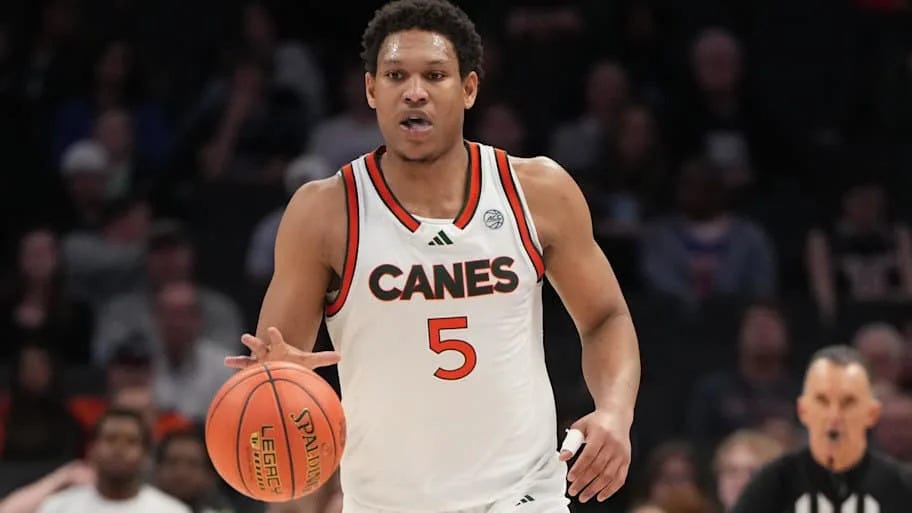
Malik Reneau (#5, Miami (FL)): Senior, 6’9”
Power Forward — Born: Apr 1, 2003 (22 years old)
Introduction
At an efficient close-to 19 points per game, Reneau earned All-ACC honors. He’s been the difference for Coach Lucas’ first year at the Hurricanes, and on top of his Indiana days, Reneau’s role versatility and high feel for the game makes him one of the best forwards in college basketball.
The Florida-born has turned the corner defensively and with his positional size and promising physical tools he’ll naturally be on every NBA scout’s radar. This scouting report emphasizes a feasible NBA role for him to grow into while also showcasing his long-term potential.
Physical Profile
At 6-foot-9, Reneau is a skilled high-feel forward that’ll make a difference with his physicality and toughness. That’s the result of his three years in the Big Ten where he’s developed fastly by improving his upper body strength. He has a well-filled frame and broad shoulders while showing fluid hips and decently light feet to give him an allround impact on the floor.
There’s no listing available, but Reneau should comfortably measure out with a wingspan at over seven feet. He’s a good athlete with big and quick hands while showing good verticality and lateral pace for his size. At 22 years old, he’s developed an NBA ready body while the natural athleticism is benefitting his defense. There’s still room to improve his body, bulk up and add muscle at 238 pounds.
At over 300 (!) articles in 3.5 years, Ersin’s NBA Draft Newsletter is your go-to for draft content. Make sure you subscribe at $6 per month for much more!
Defense
Pick-and-roll
Reneau shows great promise to grow into a positive pick-and-roll defender. There’s one area of attention in his profile that leads to his current struggles. That’s the habit of reaching in for the ball when he’s rotating and switching to ball handlers. The first three plays show examples. The lateral speed, tagging and physicality are no issues at all, but he’s giving away free angles by reaching in immediately. In the first play that leads to him being late to slide his feet by gambling for the ball at the elbow, the second play has him stay on the strong side too much while the ball handler went east to west while he’s immediately diving for the ball in the third possession after switching the drag screen in transition.
These are fixable mistakes, whereas Reneau plays physical and uses his strength to unbalance scorers. The best part is the composure, with the fourth play as an example. Despite the made shot, that’s one teams will gladly give up rather than a reverse layup from underneath the basket. He’s also showing some vertical pop, using his length well to contest after the shooter immediately launched after getting past the screen at the elbow. Overall, Reneau’s habit of gambling by reaching in for steals should be the main area of attention for NBA scouts to focus on during summer workouts.
Closeouts
Skilled forwards with the natural skill to close out are valuable. That’s the idea behind Reneau’s best defensive assets for the NBA. He has some positioning issues to grow past, with the first play showing a good example. He should always focus to close out at 180 degrees. He gives away angles to drive, bailing out ball handlers in the process. The second play shows the lack of a good reverse pivot on his last step when sliding his feet and moving backwards. Despite the ball handler launching into him. Reneau didn’t hit the deck and immediately rotated to his opponent inside the paint before the foul call. The third play has him move his hips and feet much faster, simply focusing on closing the angle for the dropoff pass, and forcing the scorer to drive inside where he jumped in and forced the stepback very well.
The length and lateral pace are two intangibles where Reneau has already mastered well. The fourth play shows an example. He dives past the pindown, pivoted his foot strongly whereafter he’s moving his feet comfortably and unbalancing the scorer while his length closed the entire finishing angle at the rim. We see a similar outcome in the fifth play, but that’s where the habit of wanting to poke the ball comes into play. He shouldn’t be too reactive, but there are many instances in Reneau’s defensive film where he’s trying to take the ball. He’s at 1.0 steals per game, and that’s simply not worth the advantages he’s giving up with this habit. Overall, there’s a promising closeout defender in there for the next level.
Cuts and defending away from the ball
At 0.8 blocks per game, Reneau’s maximizing his opportunities as the help-side defender inside the lane. He’s processing the game fairly good and quick, with consistent rotations and him using his strength and length to close angles when his defense collapses and scorers have a clear route to the rim. The first play has him time his rotation as the weak-side helper perfectly by eliminating the kickout pass to the corner and contesting the scorer at the rim. Despite the made layup, that’s a good defensive play on his end. The second possession shows another great example of him already moving toward the strong side, feeling that pass to the roller coming in. He’s positioned at 180 degrees of his assignment in the corner, limiting the angle on that play while he’s completely unbalancing the roller’s finish at the rim.
He’s always having the next thing to happen in mind. The fourth play has him limiting the angles, whereas despite being in bad positioning in the fifth play, it’s clear that he’s processing the game well as he foresaw the feed to the cutter in the middle of the lane. The NBA’s speed and motion-heavy game fits Reneau well, who’s been a revelation in the ACC in his first season there. NBA teams have a potential defensive rating improver in Reneau who’s showing many promising flashes to grow into a positive NBA defender.
Subscribe Now!
Offense
Creation out of post-ups
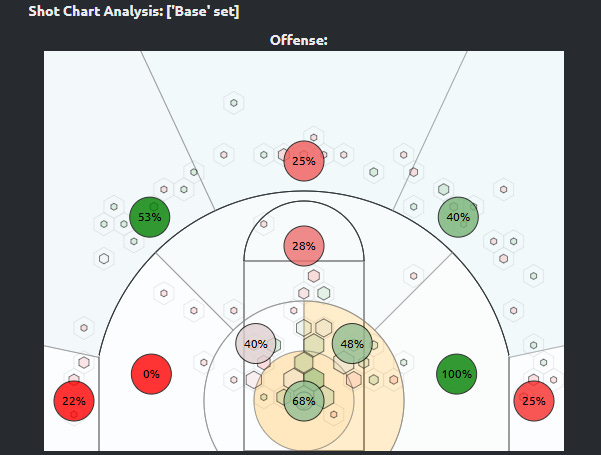
The 35.3% on 2.1 three-point attempts per game change everything for Reneau’s who needed to add that downtown jumper to his arsenal. This opened up everything of his interior game, as he now has gravity and leverage to play in the way that he’s been known for in the Big Ten. His footwork and angle recognition in post-ups are two great assets for his NBA offense. He’s strong, but the real force comes from how well he’s loading up from his pivot in the first play below, getting deep into the paint and drawing two other defenders toward him. He’s not passing out of these advantages as often as he should, but the first play below showed him keep his balance before nearly getting the and-one finish. At 78.8% from the line, Reneau’s also showing the value of staying on a floor in late-game situations. That’s another value adder.
The second play shows a good example of his fluidity after the jumpstop to dodge the incoming defender. The touch around the rim is decent, not good. That’s an area of attention. With more self-creation his finishing at the rim is 65.5% compared to over 70% during his sophomore season where he mostly played as a finisher. However, creating good angles to finish is easy for Reneau. He’s so comfortable with his jumpstops, ducking in the paint in the third possession before the soft-touch finish in traffic. The other side of the coin is that he’s forcing his finishes too often. The steal in the fourth play was clearly happening because he forced his way while he had the defense in a box and one, with the corner shooter on the weak side ready to drill that open three. Passing out of these post-up advantages is the main area of attention.
Slashing and making plays out of closeouts
As mentioned above, the self-creation with his added shooting volume changed everything for Reneau. He’s a skilled power four that’ll have many opportunities to score and create advantages out of closeouts in the NBA. With the modern game revolving around four, or even five-out, that’s a great context for Reneau to continue to add to his game and earn a long-term NBA career. To make that happen, the flashes in closeout play has to be good enough.
During conference play, defenses often gambled by ignoring Reneau on the three-point line, with the first play as an example. He’s showing what he has to do, attacking the rim before finishing the open play with a soft touch finish at the rim. For NBA defenders to respect his scoring from all levels, the floater is the main area of attention to work on. The second play is a good example. Despite the increased volume, he’s not comfortable enough to shoot in volume when defenders drop against him. The floater missed, but the process looked promising for improvement.
It’s not a fluid process yet, but Reneau’s trusting himself a lot more by making plays off the dribble. He has decent handles for his size, but still looks uncomfortable finishing at the rim on that end. The third and fourth plays below show examples. The main value here is a potential creator at 6-foot-9 as a four which traditionally, and now more than ever, rely on skill in today’s NBA. The body control, composure and core strength make it so promising. The last play has him with both feet in the paint while finding the angle around four defenders. He should always pass out of these plays, but the future improvement as a scorer on drives is very feasible to happen.
Passing, ball-moving, and playmaking
The lack of passing out of his created advantages leads to Reneau averaging 2.0 dimes per game against 2.5 turnovers. The negative assist-to-turnover ratio is a clear result of his tunnel vision as a scorer. It’s a bad thing, but the NBA will force him to adapt and prioritize a good open shot for a teammate compared to the contested shots he’s creating for himself at Miami, which is a part of his usage-heavy role for the Hurricanes.
However, the numbers are not the prevailing factor him. It’s all about how Reneau executed the reads he does make. The first possession sums up a lot. Defensive rebound followed by a quarterback pass for the highlight dunk. The composure after the post-entry pass in the second play shows the basics of passing quickly and moving the ball at an NBA level, whereas the corner shot-fake to move the ball to the elbow show the basics of Reneau recognizing when he has to pass up a good look for a great one. All basics on how the NBA game is played today where he can continue to build his playmaking from.
The intangibles work in his favor as well, with him move his hips very fluidly after the post-entry pass in the middle in the fourth play and him showing some signs of defensive playmaking by playing the passing lanes and creating transition looks. Although the latter-mentioned is overshadowed by gambling for reach-ins as described in the first part of the article. Overall, Reneau won’t be a great NBA playmaker by any means, but he’ll be a great ball-mover who will see his passing and playmaking skill grow over time. It’s fair to say Coach Lucas’ impact on his understanding of the game has had a great impact for his future which turned him into the legitimate NBA prospect that he is.
NBA Draft Projection
He has a clear role as a complementary power four with most of his value coming on the defensive side of the ball. The completeness of his offense, and in his role the skill is vital, still has some areas of development to it.
Reneau’s always been a interesting case study and he’s answered the need of a jumper while the game has clearly slowed down for him over the years. I expect Reneau to grow into a niche role in the league but he’ll have a smaller margin for error and has to develop fast in his first two years. Overall, I think he’ll be a solid late second-rounder who’ll end up signing a two-way contract while he’ll primarily be playing valuable G League minutes early in his career.
There’s no doubt that Reneau belongs in the NBA. Even if he ends up undrafted, he’ll be one of the first forwards to be tied to a two-way deal.
At over 300 (!) articles in 3.5 years, Ersin’s NBA Draft Newsletter is your go-to for draft content. Make sure you subscribe at $6 per month for much more!