
Jack Kayil Scouting Report
Europe's next guard in the NBA is in the making. Jack Kayil has been highly on my 'my guys' list for two years now. The ALBA Berlin guard is set for a long NBA career, here's all you must know:
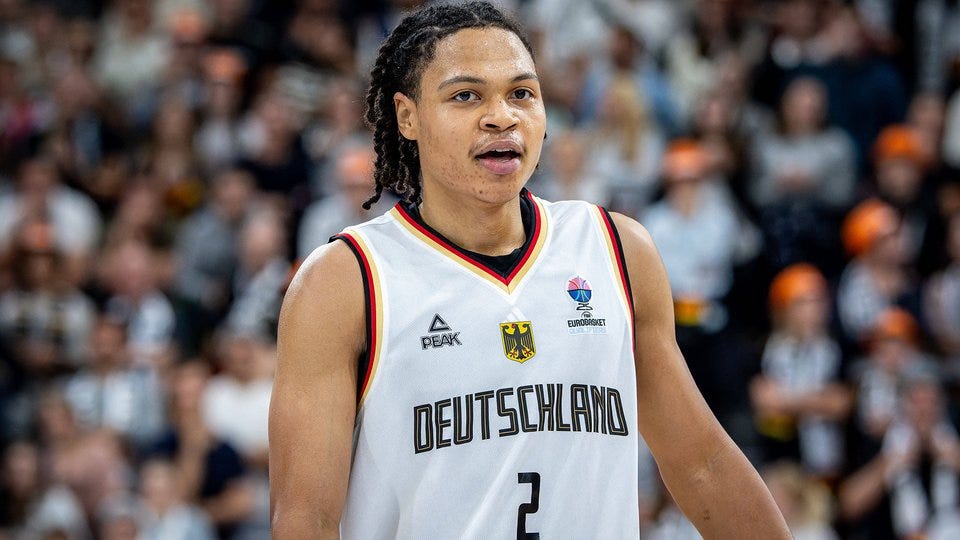
Jack Freeman Kayil (#2, ALBA Berlin): 2006, 6’3”
Point Guard — Born: Jan 27, 2006 (19 years old)
Introduction
Physicality and role versatility are two vital traits in today’s NBA. Therefore, we see more teams prioritize power guards with NBA-ready bodies instead of the traditional hyper-athletic ones. That’s a result of the lack of physical tools simply leading to little playing time early in a player’s NBA career, the years where their development is most essential.
Therefore, we go across the pond to Berlin, Germany. That’s where Europe’s next top guard resides after moving to ALBA from Mega Basket in Serbia, where he had a decent year at close to eight points per game in the ABA League. Kayil has been a standout at the international level for a few years now, and now he has a chance to gain valuable experience for one of the better clubs in Germany that’ll also play at the Basketball Champions League.
This scouting report emphasizes a feasible NBA role for Kayil to grow into and what his long-term potential will be.
Physical Profile
At 6-foot-3, Kayil has decent size for the NBA level, where he’ll solely play as a one or a two. He has broad shoulders and enough room to continue to bulk up and add to his frame. Kayil is tough and physical. He has light feet despite the heavy build and keeps improving his footwork. He has good lateral quickness and decent burst, but the physicality is the main trait.
There is no official wingspan available, but my best guess would be somewhere between 6-foot-5 and 6-foot-7. Kayil has big hands and shows decent verticality, helping him to compensate for a lack of length. However, the core strength is at a much better level. He shows good capabilities of keeping his balance and has decent hip flexibility. Overall, NBA teams should determine how much strength they can add to his frame, as the potential to continue to bulk up is there.
Offense
Closeout scoring
Kayil must show better patience when he’s creating angles and space out of closeouts. He has good footwork but often rushes his slashing that’s taking away the value of the balance his feet create. He’s often caught driving without a plan, settling for contested midrange shots. The first play below shows an example. However, the positive aspect here is that the physicality pops, and Kayil creating a clean scoring angle after the gentle pushoff. He’s also aggressive in his drives. After a shot-fake in the second possession, he attacks the strong side, with a driving lane to the rim where he’s trying to posterize his opponent. Despite me preferring substance over flash, the toughness and will to let his physical tools speak should be considered solely a positive.
In the third possession, it leads to him using his paint touch generation as leverage for his three-point shooting off the dribble. Kayil does well to sell the driving into the paint to defer to a stepback three. With quick execution there’ll be room for him to operate in those one or two dribble shots when creating out of closeouts. Despite the make in the fourth play, it’s vital to not fall in love with the jumper too much. Another clean fake leads to Kayil using the one-dribble pull-up after a clean angle. He took the right decision here, but it won’t hurt him to pressure the rim in these plays and entirely collapse a team’s defense. This is because in case he misses the three, he’s losing his man in transition and long threes often lead to long rebounds, where the opponents had the advantages in the fourth possession.
Catch-and-shoot
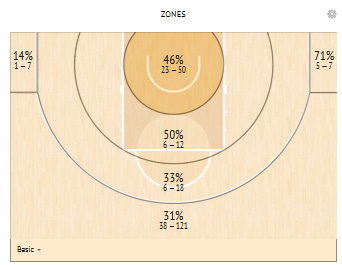
At 36.8% on 95 three-point attempts, Kayil has shown good returns this past season. That’s a result of a good shot process. The translatable part to the NBA is Kayil already developing a habit of maintaining a high-arcing release. That’s a positive in his profile which makes it feasible he’ll continue to improve as a shooter. One of the areas where he can improve the margins are in his footwork. The first play below shows an example of him pivoting with his right but needing to correct it after the catch. Improving in setting his feet before the catch saves him half a second that the defense must close out on him.
Regardless, Kayil is used to be on the move constantly. He’s relocating purposefully and has a good habit of immediately using his hips to get at 180 degrees of the basket. By keeping the ball lower, he’s keeping the threat of his rim pressure alive. The second play shows an example where his NBA range is not an issue. Kayil brings a scalable shooting volume to the next level. For guards it’s vital they constantly make their threes and keep the offensive rating at par. That’s where Kayil’s experience as a pro bring more feasibility. The third and fourth plays show the quickness of his jumper. That’s an NBA scout’s vocal point in his evaluation this year.
Passing, ball-moving, and playmaking
At 3.0 assists to 1.9 turnovers per game, Kayil has shown good returns as a passer and a playmaker this past season at Mega Basket. One of the expectations that NBA scouts need to stay away from is to expect plus playmaking value in Kayil’s profile. He’s sufficient as a pick-and-roll creator, but the threat is to get downhill and create angles to score. Kayil is actively seeking the pass but often shows tunnel vision as he defers to create his own bucket. That’s the context behind playing for Mega Basket, whereas he was showcasing more of his talent than the team having the ambition to win or qualify for European basketball while playing in the ABA League.
That’ll change this year at ALBA Berlin. Kayil is good at breaking down the defense. The third play below shows an example. Fabulous change of pace after locking his assignment in his back while utilizing the ball screen. By forcing the help defender to decide, Kayil drew two men to him which made the back kickout pass the easy execution he seeked. The positive consistent line in Kayil’s playmaking is that he’s looking to get rid of the ball in a few seconds. But he doesn’t make bailout passes. He’s using his slashing and driving to create angles. He reads the court very well for his age, with the last play another quick example of feeding the cutter early with a wide-open lane in the middle. I expect Kayil to continue to be a reliable ball-mover and secondary creator in Germany this season.
Pick-and-roll ball handling
The aforementioned tunnel vision is clear when Kayil’s creating plays out of the pick-and-roll. That’s contrary to his ball-moving where he’s seeking to get the ball out of his hands quickly. Kayil is often caught taking his time in creating plays. He’s waiting out time for ball screens to arrive. He has the habit of starting pick-and-rolls deep to maximize his driving speed. That’s not a terrible thing, but it takes away the game’s pace, which is vital in how NBA games try to play in maintaining their offensive rating.
The first play shows an example. Settling for a three from that range is not acceptable when milking seconds away before the screen arrives. Kayil’s pick-and-roll creation is exactly what NBA teams seek. The second play shows an example. Despite the miss, the quick execution on the play makes it feasible NBA coaches are comfortable in putting the ball in his hands after a few years. The main area of development is to stop forcing plays. The third and fourth plays below show examples of Kayil needing to work on responding to pressure. Whether he’s hedged or blitzed, Kayil hasn’t shown comfort in dribbling or passing out of high pressure, which is a must to succeed as a ball handler in the NBA.
Subscribe Now!
Defense
Pick-and-roll
With decent screen navigation, Kayil shows a good first step toward being a positive pick-and-roll defender in the NBA. However, the issue is the lack of experience. He has constantly shown to be too reactive to ball handlers. He’s often lured to step out after getting past the ball screen instead of moving back and dropping regardless of how the ball handler tries to lure him to commit early. The first play shows an example. Good navigation through the incoming ball screen, decent tag but he’s stepping out to the ball handler before he’s in the interior, which led him to lose his man. That’s solely the experience game he lost against a decade-plus Euroleague veteran.
The lack of experience is telling at times. In the second possession the screening five forces the switch, but Kayil stays with the ball handler. With more motion around him, he should be ready to rotate and switch actively, as in this play he was guarding no one. Regardless, improvement is feasible when considering the level of his screen navigation. The third play shows an example of the right fundamentals being used. He pivots out further which helps him to soften the cushion when he throws himself between screener and ball handler. His fluid hips and quick feet are valuables here.
Closeouts
The lack of rotations is not at a worrying stage. The reads Kayil makes are making sense and in his closeouts that’s visible. The first play below shows an example. He’s pivoting well on his last step, but steps out too far, which leads to him getting blown by in his closeout. That’s a summary of Kayil’s perimeter defense. He must improve at staying within the interior in his closeouts and play with the margins he can afford in giving room on the perimeter. Combined with a ‘beat me’ off the dribble approach, his physical tools will lead to him gaining more of a dominant stance as a defender, rather than being reactive and leaving him to the mercy of creative scorers. The second play shows an example as well.
Regardless, the body movement and footwork are impressive for his age. The third play shows him using his physicality while covering ground. That’s leading to much better closeouts if he develops the habit of staying at a distance of the scorer in his closeouts. It’s feasible Kayil can be a positive closeout defender in the NBA, as the strength, footwork and speed give him clear physical advantages compared to his peers.
Transition defense in the open floor
We see a much faster game in the NBA compared to Europe. Therefore, defending in the open floor and positioning themselves properly on defense are vital parts for an international prospect. In Kayil’s case he’s often caught not dropping back enough. He establishes positioning but then gets lured to move toward the ball handler again, which makes him more vulnerable in open space. In this case, his last step must be elite to establish his balance and immediately pop back if necessary. But it’s not feasible to count on that every time. The first play shows an example of him moving back out, which costs him positioning against the shooter who could have brought it all the way to the basket.
Kayil shows good habits of communicating actively. That’s the lead role in him, which was visible at the FIBA U19 World Cup this past summer. The second play shows an example of him setting up his team defense and closing the angle in the middle against the transition scorer. He lost balance after absorbing the blow, regardless of it showed him reading the floor well as a defender. Another positive is Kayil showing decent decision-making when he’s hedging in two against one situations. The third play shows an example. He was a tad off to deflect the pass, but the quick second jump was impressive. There are many good puzzle pieces for NBA teams to use, but for Kayil’s long-term outlook it’ll come to gathering valuable experience. Therefore, it’s good that he’ll play a good role for ALBA Berlin this season.
Catch-and-shoot
Rotations are the most vital part to improve. He shows good flashes of that when defending away from the ball. The first play shows an example. He’s keeping good control of his assignment at the elbow and follows the play well. However, the feel for his rotations need work. The corner pass was inevitable, and therefore he had to already move toward the corner and hedge both assignments as his teammates were crowding the interior. That would have left Kayil in control in how he’d impact the passing lanes, despite two options for the entry pass recipient to choose from.
Another area of development is Kayil being hesitant to jump and raise his arms in closeouts. He’s often focusing on taking away being attacked off the dribble. But that leaves shooters in an advantageous position to shoot over him. At 6-foot-3, Kayil must use his vertical pop more, although it makes him more vulnerable to fakes. That’s acceptable considering the quality shots that were given up in the second and third plays below. The idea behind his closeouts is good, but for a volume-shooting game in the NBA he needs to diversify his closeouts against spot-up shooters.
NBA Draft Projection
Based on the strengths and areas of development mentioned above, I project Jack Kayil to be a lottery-level pick for the 2026 NBA Draft. He’ll be the next European rising up draft boards. As one of Germany’s biggest guard prospects since Schröder, Kayil has the physical tools and vital intangibles to grow into a starter in the league. I don’t think it’ll help Kayil if he returns for 2027 and considers the collegiate route. His profile is best to develop further in the NBA, and with fewer depth at the guard positions in this class, Kayil is in an advantageous position to solidify his top fifteen status in June 2026.