
David Punch NBA Scouting Report
NBA-level physicality while showcasing a complete defensive package. Punch has everything to be a way above-average defensive weapon in the league. He's 100% getting drafted, and here's why:
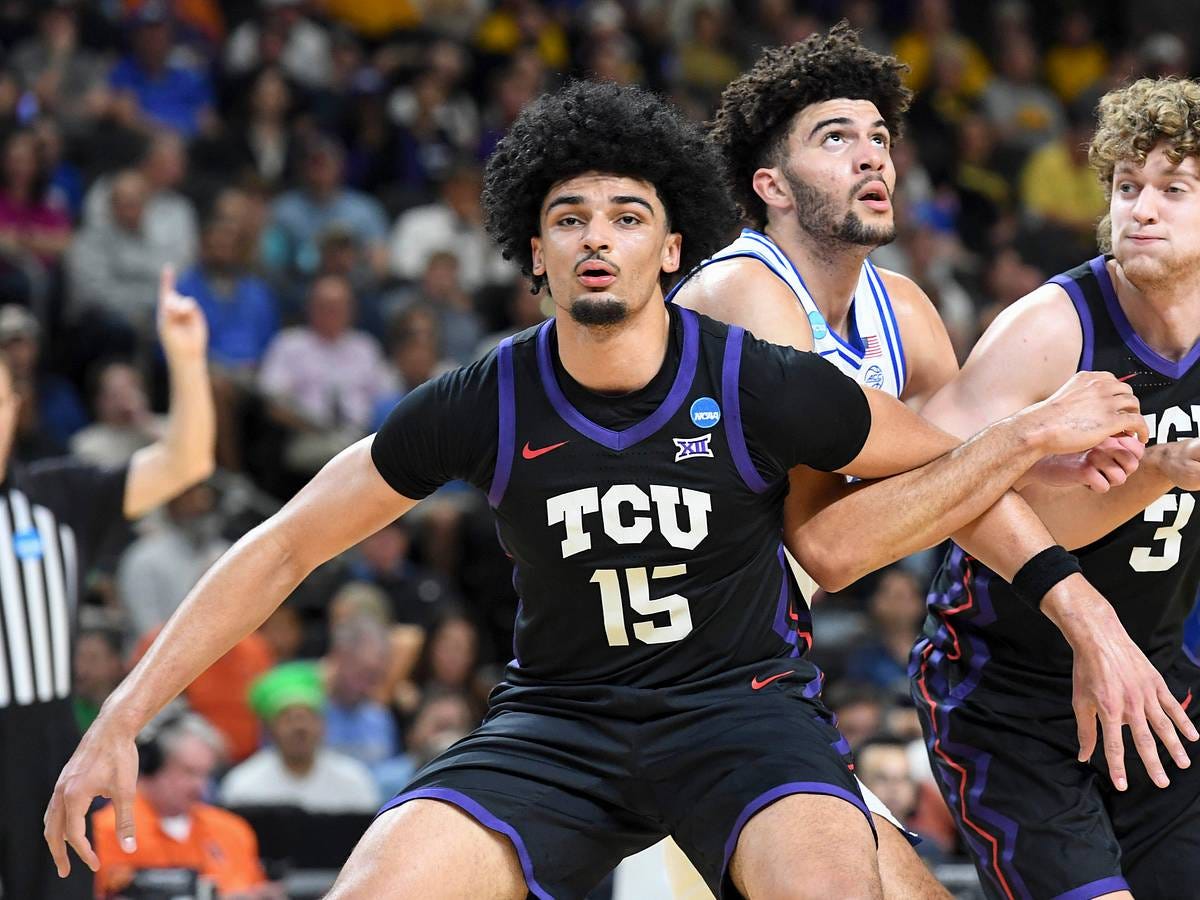
#15 David Punch, Texas : Junior, 6’7”
Small Forward/Power Forward — Born: Aug 2, 2006 (20 years old)
Introduction
In today’s day and age, role versatility is everything. It improves the margins to grow into a feasible piece of the depth chart while seeing consistent minutes throughout the season. David Punch is next in line. The Harker Heights, TX-born transferred from TCU to Texas this summer, and is one of the best wing/forwards among this year’s upperclassmen. After TCU earned a ticket to the NCAA Tournament, Punch received a All-Big 12 Conference honorable mention.
Looking at the top of college ball this year, it’s clearly a wide-open race where the Longhorns are one of the better teams out there. Punch is a big part of that. I project he’ll have a All-Conference season while being the pillar to Texas’ defense. The versatility on both ends it the main intrigue and this scouting report emphasizes to translate that to a feasible and sustainable NBA role he can grow into.
Physical Profile
At 6-foot-7, Punch has ideal wing size while he’s in a forward’s body. At 245 pounds he has a NBA-ready frame and broad shoulders. He’s strong and the best part is that his core looks to keep improving. He moves like a wing while he’s in a pure power four’s body type. The lateral pace is decent, while showing some vertical pop as well. The overall athleticism is on a NBA level.
His presence is felt as a combination of finesse and decision-making. Punch has long arms and while there’s no official measurement out there, I’m leaning toward him officially measuring out at a draft event at a close-to seven-foot wingspan. The physical readiness of the 2006-born is one of the intriguing parts of his profile.
Defense
Pick-and-roll
Punch moves fluidly in the pick-and-roll, but the positioning often shows a lack of consistency. He’s composed underneath the basket and TCU mainly used him on the opposing big man. He’s fluid with his hips and moves well, but he’s gambling more while actively seeking to play everything except drop. The first play is a positive part to where he’s simply using his strong upper body to not give a good scoring angle while the length clearly bothered the opponent’s lay-up. The second possession has him in trouble because he was late to rotate to the wide-open finisher inside the paint. He recovered decently, but had to deny the help as the scorer was bailed out by the smaller defender which took Punch out of that play.
The third possession has him trying to ice the ball handler who already recognized the play in how Punch set his feet prior to that, leading to the roller already being hit before he got the hard-nosed physical Punch in his zone. It’s not a feel issue, but more a timing problem. That often puts him in trouble, just like the fourth possession. The opponent fakes the high ball screen and Punch’s already way outside the painted area while his assignment’s in the paint. That left him nothing but closing the angles. Despite the steal that was not a good play. However, the long arms and timing on the deflection were a result of his activity, but the context doesn’t add up as it would have been a dunk given away if that pass went through. Regardless, there’s no denying the defensive activity with 1.3 steals and 1.9 blocks per game as a sophomore.
Closeouts
Regarding closeouts there’s a world to gain for Punch. He’s moving good laterally and the close-to-elite last step and body control makes it sustainable that he’ll grow into a potentially top tier defender at the next level on that end. The first play has him keep his balance while moving his feet strongly. The best part in Punch’s profile is that the closer he gets to the paint, the more overwhelming his upper-body strength becomes to the scorer who simply has to initiate contact to find a good scoring angle on him. The first shows how he’s denying that, while the second possession has him defending in space after another strong last step and body control. It’s super-impressive to how he’s moving like a wing while trapped in a pure power four’s body.
Despite the third possession leading to a bucket, Punch shows some serious high IQ. He was late to close out and planted his pivot so far that he tried to trap the opponent’s first step and move him to the angle that would make it easier for Punch to compensate for his late closeout. The scorer’s craft didn’t allow that but the idea behind the play was excellent. He’s using his length to his advantage as well. The fourth play has him slide his feet to perfection, denying entry to the interior and forcing the off-the-dribble three which he contests. Keeping his arms high means that Punch saw that jumper coming from miles away. He’s reading the offense very well, which makes it more feasible he’ll make the right executions in terms of how he’ll stop opponents. It’s clear as day that Punch is ready to be a way-above-average closeout defender in the NBA. And in a power four’s body, that’s a serious value adder to his draft profile.
Cuts and defending away from the ball
When grading defense away from the ball, I look at personal fouls first. Looking at how physical Punch plays, he’s been averaging 2.2 and 2.6 per game which are good numbers. He’s in control. His decision-making is the main thing on that end. He’s moving the right away and often generates deflections or stops at the rim because he’s consistently rotating as well. He got lucky in the first play as he moved laterally before he mis-stepped for his last step and got bumped out of the way. He found himself close to the rim to deflect the high pass to the play-finisher, earning him the steal.
The best part in his profile is that he’s so patient. He won’t bite on fakes. The second possession has the baseline out-of-bounds play with a few seconds left and he didn’t phase when the scorer tried to pump-fake him with the shot clock winding down. That’s the pure part of his feel for the game that NBA scouts need to take into account. The third play has Punch sell that he’ll close out as the defense was on the point of collapsing, knowing it would follow with the pass to the cutter that’s been his assignment. He moved his hips well and got the stop near the basket using his vertical pop.
Punch’s feel for the game and executing his defensive reads are simply beyond his years. The fourth play shows a similar outcome in how he’s using his movement pattern to push opponents to a certain direction—with Punch knowing they try to avoid playing physical against him. This makes it more than sustainable that he’ll grow into a way above average team defender in the NBA
Subscribe Now!
Offense
Creativity and scoring out of closeouts
The other side of the coin is that Punch’s offensive game needs to expand. He’s a below-average shooter at 27.6% and 23.9% in the past two seasons. The volume is low, but it would be the same conclusion if he shot 40%. The mechanics look off and the shooting part is something he’ll have to focus on in the next few years. Looking at the high-end defensive value, Punch’s main ticket to the NBA is showing he’s sustainable in his role on offense where a team will maintain there offensive rating with him on the floor without putting more pressure on the other four on the floor. As a 14-points-plus per game scorer, he’s productive, but how much of it is real sustainable scoring?
At 59.9% rim-finishing, Punch is playing a well-rounded game as a closeout scorer. He’s creative and uses his brute strength to dominate and even finish against bigger opponents with comfort. That’s excluding his one-plus dunks made per game. The touch is decent, but should gradually improve. The first two plays show composure in the last step but a way overrushed finish. He’s missing layups because teams are forced to be super-physical against him in the paint. At 63.3% on 5.0 attempts from the charity stripe, he’s getting there in bunches but the overall lack of scoring touch will get in his way in the NBA where everyone will be stronger and he won’t have the brute strength advantage as much as he has it in college.
The shot selection is shaky at times as well. The third and fourth plays below confirm the tunnel vision he’s playing with because if the strength doesn’t help him to find the angle, it’s mostly tough layups that he’s getting when creating for himself out of closeouts. He’ll definitely improve but overall he’s further away from being a offensive weapon in the NBA than I initially anticipated.
Self-creation out of post-ups
The physicality and being in a power four’s body forces Punch to exploit that and be more of a creator for himself and others out of post-ups. He’s moving so fluidly it’s absurd at times. The first play has him do everything right. Keeps the ball to the baseline, lures in help defense before spinning and planting his last step to perfection. But he can get nonchalant at times with the composure. The second play has him ready to finish off both feet but he’s standing in the paint for a second before stepping again for the turnover. That’s just a bad look. The consistency in his focus needs to be the vocal point in his junior campaign.
But the main area of development is to pass a lot more out of his advantages in the post. Punch has clear advantages in almost all possessions I saw from him in the post and he’s always finishing through the defense even when they already committed help. The third and fourth plays show good examples. NBA coaches will demand him to find the open teammate as he’s not properly using his gravity of the physicality and dominance in the post. That’s wasteful and he’s doing his pro future a disservice. Therefore, he must improve his tunnel vision as a scorer at Texas in his junior year.
It goes both ways. The fifth play might have been a isolation masterpiece in crunch time, but the reason to why not drop the ball off in the last possession is the main emphasis behind the aforementioned. The potential is not the issue. Not even by the slightest. For Punch is to maximize his decision-making for the NBA because he’ll never have the same margin for error again as a pro compared to now as a college player.
Passing, ball-moving, and playmaking
Despite the tunnel vision, Punch puts up a 2.0 assists per game season to only 1.7 turnovers. That’s good value considering how much he’s playing in the interior with multiple defenders on him. As mentioned before, he’s not passing out of his advantages as much as he should. The playmaking potential is clearly there, but the value as of now is still subpar. He’s a good ball-mover because when he’s not looking to create for himself he sees the floor fairly well. It’s mostly by using his screening as his weapon. He’s a solid screener and uses handoffs to serve as a hub to cutters and moving shooters around him. The first three plays show good examples.
He’s underwhelming as a passer though. The last three plays have him using high entry passes that won’t immediately lead to post players using their feet to establish a dominant stance. The playmaking overall is on the raw side and the tunnel vision as a scorer is not helping his case. As of now, it’s still not a big problem as he’ll have two more years of eligibility left.
NBA Draft Projection
In Punch’s NBA profile the improvement as a passer and playmaker and the most vital swing skill that’ll determine a large chunk of his NBA future. Despite being a clear potentially top defender, the below-averaging shooting, tunnel vision and raw playmaking puts pressure on how much he can be on the floor for an NBA team in terms of his offense. When taking improvement into account, it’s clear as day that NBA teams won’t let him go undrafted.
Whether it’s the 2027 or 2028 NBA Draft, the high-end utility piece profile becomes more popular and depending on how fast he’ll develop and sustain the strengths of his profile while transferring to Texas can lead to him rising all the way to the late first round. Overall, he’ll be a solid early second-round selection making it feasible he’ll sign a guaranteed contract. Looking at how much he’ll have to develop on offense, I’d bet on him declaring for the 2028 NBA Draft, but he’ll definitely test the waters in 2027.