
Blake Harper Scouting Report
We see more power guards succeed in the league via their role versatility. Harper is next in line and there's much to like about his long-term potential and the role he'll have early. Read more here:
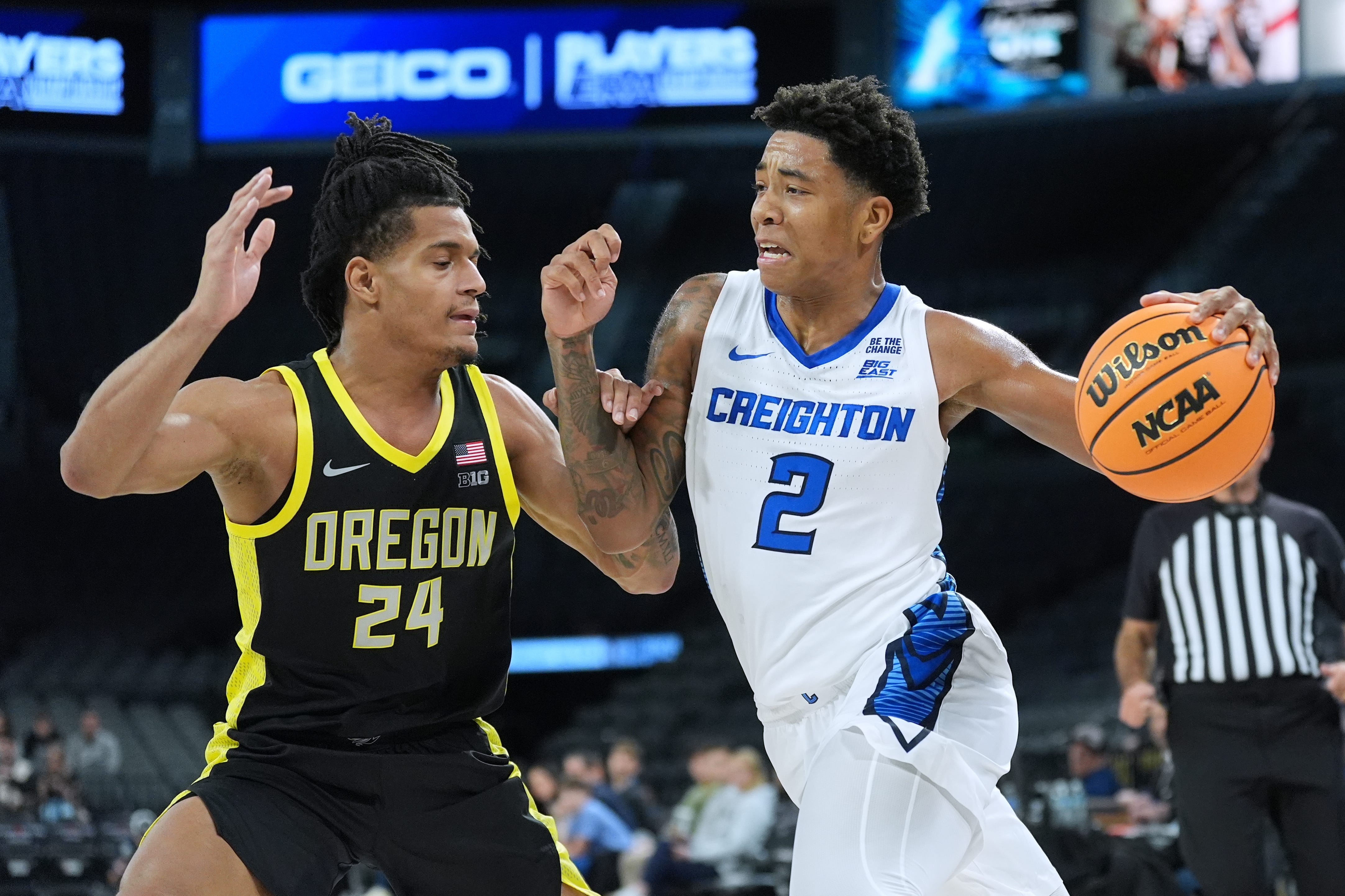
Blake Harper (#2, Creighton): Sophomore, 6’7”
Shooting Guard/Small Forward — Born: Sep 30, 2005 (20 years old)
Introduction
As the first freshman MEAC Player of the Year winner in conference history, Blake Harper transferred up to Creighton. While scoring close to twenty per game, Harper’s rim pressure, angle-creation and drawing fouls immediately stood out. He’s a born scorer who can reduce the number of ball touches while still being impactful on winning.
That’ll help him to translate immediately at Creighton while he took a big step up by transferring to the Big East. He fits the mold of what many NBA teams seek to improve their depth on the wing. This scouting report emphasizes the future role he’ll have in the NBA alongside showcasing the long-term potential while showing his areas of development as well.
Physical Profile
At 6-foot-7, Harper is a well-rounded slashing guard with good athleticism. He has a strong first step and improved his upper body strength very well at 220 pounds. With fluid hips and improving footwork, he’s mastered in recognizing and attacking angles. That’s putting him into a slasher’s archetype. He doesn’t have great burst, but shows good change of pace and lateral quickness.
At the rim, Harper’s core keeps getting better. He’s balancing himself while absorbing contact. That’s an area of his physical tools that’ll continue to get better. Harper uses his broad shoulders and decent verticality well as a rebounder and initiating contact while finishing at the rim. There is no listing available, but the length immediately stood out. I expect his wingspan to officially measure out around seven feet.
Defense
Pick-and-roll
Harper has the tools to effectively switch to or immediately defend in the pick-and-roll in the halfcourt. That’s a part of his physical tools while he’s built in a guard’s body. However, the screen navigation needs to improve. He’s decent at fighting through ball screens, but the awareness needs to be polished. The first two screens show Harper with the tag and throwing in his arm between himself and screener, but it happened after he collided with the ball screen while focusing on the ball handler. He has to focus on keeping his surroundings into consideration when he’s responding to what ball handler’s do. As of now, he’s often too reactive on the defensive side, which puts a target on his back in terms of teams utilizing him in ball screen actions.
The third plays shows a great habit that’s consistently coming back in Harper’s defense. He gave up full separation, but hard-tagged the screener and didn’t allow him to establish good positioning for the potential offensive rebound. In the fourth play, he’s again using his length in tagging the ball handler that shot the above-the-break three off the dribble. The habits are a value riser, but the screen navigation, specifically for his awareness, are the main area of development for NBA scouts to focus on this season.
Closeouts
The defensive footwork is off compared to what Harper shows on the offensive end. That’s hurting him in closeouts. He’s either not planting his last step and pivot well, where he’s not in balance and thus not able to absorb contact well, which is shown in the first possession below. Or he’s too late with his closeout and gets burned off the dribble when closing out too far. The second play shows an example. Regardless, that’s partially in him transitioning from the MEAC to a power-five conference. That’s why I focused on the game film in his performance against Gonzaga, a program with NBA-aged opponents which should offer more valuable sample size.
Regardless, the footwork is partially imminent to improve via reps, as Harper’s is still slightly adjusting to a higher level. When he has his last step set properly, his strength immediately pops. The first play shows Harper closing out where the ball handler attacks the strong side, the early tag and slight push takes him away from a deep paint touch, whereafter Harper uses his excellent length to contest his own forced midrange jumper to the opponent. The fourth play shows the opponent struggling with the last step before trying to post up. That’s where Harper immediately threw his body in to unbalance the scorer and use his length and size to close the angle. That’s the defensive reads NBA coaches like to see. There’s serious potential in Harper being a good closeout defender at the next level.
Transition defense in the open floor
One of the must-have traits is adjusting to the NBA pace. Therefore, defending in the open floor is a part of every slasher’s evaluation as finding their spots quickly matters as much as them recognizing the defensive spots they’ll have to cover in transition. To close gaps with much more space to cover, the angle recognition becomes essential. That’s where Harper needs some more reps in adjusting to the Big East and power-five leagues overall.
The first play shows him playing drop, trusting his length to cover a potential off the dribble three. However, his positioning was at about 270 degrees from his assignment, leaving the strong side open. The lack of toughness in absorbing the hit led to the wide-open angle to finish to his opponent. That’s a serious area of development in his profile. We see a similar outcome in the second play. With the entire weak side open, Harper was simply responding to his assignment’s stutter instead of closing the angles and tighten gaps by positioning himself in the midpost area. Being reactive is never a good thing on the defensive end. I expect some more assertiveness from Harper there in the remainder of the season. We see a similar outcome in the third play below, where Harper simply doesn’t stay at 180 degrees of his assignment. Positioning is the main area to focus on.
Cuts and defending away from the ball
One of Harper’s area of attention is to avoid overhelping on the defensive side of the ball. That’s a big part of growing a better feel for the game and decision-making as a team defender at the next level where the game is played much faster. The first play shows the ball handler being stuck and after the jump stop in the paint, he could only get bailed out with a dropoff pass, which was facilitated by Harper in how he went as the help defender too early in the play. Especially considering his length, he should make the decision when he sees the ball handler was about to pick up the dribble with the jumpstop instead of before. The second play shows Harper staying more put, avoiding the same bailout pass. That’s a big difference and, despite the team foul, being the way it should have went every single time.
The best way for him to improve as a team defender and away from the ball is to focus on his tags as mentioned earlier in the report. The third play shows how he can unbalance scorers inside the paint. But getting backdoored, like in the fourth play, or overhelping, as shown in the first two possessions, will put heavy pressure on a team’s defensive rating with him on the floor.
Subscribe Now!
Offense
Shooting off the catch
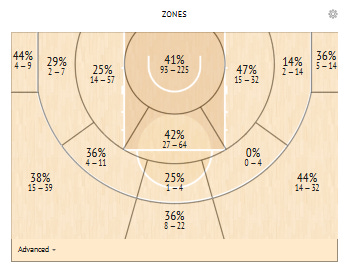
Harper does most of his damage downhill. That’s a big value adder to his profile. We often see prospects prioritizing as much three-pointers as possible, with shot selection suffering. However, Harper is a professional scorer inside the lane in the way he’s attacking and recognizing angles. However, to add to his leverage as a paint touch generator, we must see a consistent jumper from him while showing a path to slowly increase his volume. Considering his role as a slasher and closeout scorer, we’ll mostly see him serve as a stationary shooter, but the one or two-dribble pull-up are evenly essential.
The positive part in Harper’s shot process is that he sets his feet quickly. Changes sides in the first possession whereafter he moves his hips fluidly to get at 180 degrees of the basket before rising up for his jumper after his strong pivot. The second play shows him again pivot strongly, keeping his body in driving mode before surprising the defense with the shot off the catch in the second possession as well. He doesn’t bring the ball down too much and has a fluid process balancing his body well and showing a decently high-arcing point in his jumper. At 40.0% on three attempts per game so far in his collegiate career, the numbers confirm the process. However, I’m not entirely convinced that the number is sustainable when increasing his volume yet.
Creation out of post-ups
I have a soft spot for post-up scoring wings and guards. Harper’s strong upper body and crisp offensive footwork opened the opportunity for him to play more as a creator with his back to the basket. He’s great at creating angles to finish or pass from. He’s comfortable over both shoulders and has good body control before rising up. The first play shows him scanning the court well, using his height to see over the defense while he’s trying to lure in help defense. When that didn’t happen, he finished the play himself over his left shoulder. The toughness and strength pops immediately. The second play shows him bullying the interior defense until he gets all the way to the basket. With two feet deep inside the paint, the layin was the result of his hard work.
He’s comfortable in getting his angles via immediate contact. The third play shows him creating the angle on the baseline side after he bumped his defender off his spot before the entry pass. He settled for a jumper, but I like his confidence to immediately punish when defenders allow him to get these angles. He’s also composed. The fourth play shows him get two feet inside the paint, pump-fake against multiple defenders before finishing through contact. There’s a degree of tunnel vision there, as he should drop the pass off. But in terms of him getting these advantages as easy as that makes his profile a big value riser regardless. NBA teams will gladly allow him to punish mismatches via post-ups and force help defenders to generate open personnel on the perimeter.
Slashing and making plays out of closeouts
We’ll primarily see Harper play as a slasher and closeout scorer. He has decent burst but much better lateral quickness and seeks immediate contact to unbalance scorers. At 70.6% finishing at the rim, so far this season, the body of work in getting paint touches on the fly helps him to maximize the number of high quality attempts he takes. The first play shows an example of him faking and hitting the baseline on the drive before his miss was tipped in at the rim. However, NBA defenders will be tougher to beat with his handle. It’s not tight enough to show his creativity, move from east to west or use his craft inside the lane. He’s primarily getting downhill based on lateral speed and power, rather than creating angles with his handles and creativity. That’s the area of concern so far in his offensive profile. The second play shows an example.
The third and fourth possession show another must-fix trait as he settles for shots when he doesn’t have the driving angle. That’s where he must keep the ball moving to keep his spot on the floor. He’s taking deep threes and allowing opponents to run in transition. There’s a degree of tunnel vision of a result of him wanting to prove his value on the offensive end a bit too much. Regardless, when he’s getting downhill he’s tough, relentless and gets consistent deep paint touches. The fifth play shows him switching sides after the catch, driving with the ball in his left. Another area of development is him focusing on finishing with his right hand as well. He’s often seeking his left, and combined with the weaker handle it’ll make it easier for defenders to take away his stronger finishing hand. Regardless, it’s very much feasible he’ll put his scoring potential on further display in his sophomore season, where the above-mentioned should gradually improve.
Passing, ball-moving, and playmaking
Harper has about 3.2 assists to 2.5 turnovers per game so far in his collegiate career. That’s a positive. However, the tunnel vision as a scorer puts some risk in his potential as a playmaker. He doesn’t have to run the team as a jumbo initiator, because that’s not his role. Teams will ask him to play as a slasher, ball-mover and secondary creator instead. That’s the main area of focus in this assessment. The best part of his playmaking potential is the degree of composure. He’s calm, well-coordinated and reads the floor well. The size and height help him to see over the defense as well. The first play shows him simply playing out of the trap on the weak side, with a crisp pass to the opposing elbow. The second possession has him creating angles to utilize the space in the painted area before hitting the cutter with his right.
Teams seek slashers that can activate help defenders to throw in cutters around them. That’s Harper’s finest playmaking skill. He’s not afraid to make risky passes and prioritzes finding cutters and open shooters. That’ll naturally improve once he becomes more of a passer and playmaker than a scorer. The third and fourth play shows him executing easy reads, more as a ball-mover. We see that playmaking potential and gradual improvement are vital for slashers to survive in today’s league. That’s where Harper has an advantage over many of his shooting-focused slashing peers in this draft.
NBA Draft Projection
Based on the strenghts and areas of development mentioned in the scouting report, I project Blake Harper to be comfortable second-rounder in the 2026 NBA Draft. However, as a sophomore there’s no reason to rush his way to the NBA. Considering many areas of development on defense that’ll need reps and time, it would be wise to return for his junior year and focus on the 2027 NBA Draft instead. His archetype, role and physical tools will make him a clear late first-rounder, especially if the defensive lapses improve.
Harper is currently ranked at 41 in my Big Board 2.0, which should be his current range, especially if Creighton will have a strong year with a run in the NCAA Tournament with Harper as one of the key players.