
Arrinten Page Scouting Report
As one of the best point forwards in college ball, Page has the opportunity to showcase his entire skillset in the Big Ten. Is he an NBA prospect? Let's dive deeper into his future role and potential:

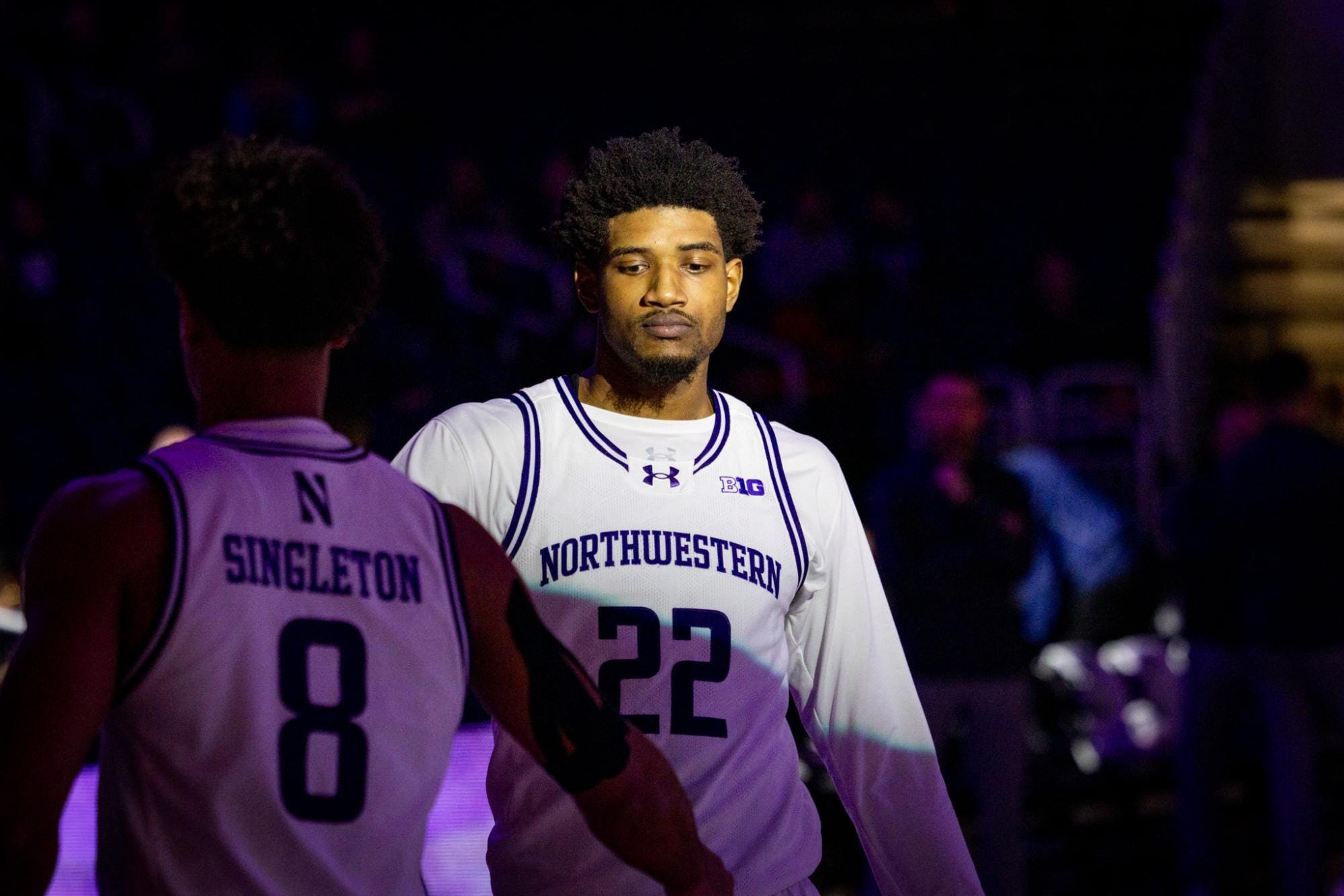
Arrinten Page (#22, Northwestern): Junior, 6’11”
Power Forward/Center — Born: Mar 17, 2005 (20 years old)
Introduction
As a consensus top 10 center in the class of 2023, Page didn’t get a fair opportunity to play in his first two stops at college. He mainly came off the bench at USC and Mississippi State, scoring over three points per game and collecting two boards in back-to-back season. The fair opportunity to play is a make or break for every prospect. Now that he’s at Northwestern, Page is turning the corner and showcasing that he has everything to be a pro.
As of today, he’s scoring an efficient fourteen-plus points per game while showing his high skill level and total offensive package. We’ve seen numerous point forwards suceed at the next level, and that’s where the emphasis of this scouting report comes from. Let’s put his NBA potential and future to the test.
Physical Profile
At 6-foot-11, Page is a long and strong athlete. Not a vertical leaper but one with good strength and broad shoulders. He’s showing crisp footwork while having good positioning helping him get the advantage when he’s physical inside the paint. He’s a classic tweener of the body indicating he’s a five while he has the skill level and quickness of a four.
There is no listing available, but his wingspan should measure out well over 7-foot-3 during the summer. At 245 pounds, the Atlanta, GA-born brings an NBA ready body while showing good physical value, mainly as a screener. That’s an advantage considering the fact we see less Americans managing to seperate themselves from their peers on that end.
At over 275 (!) articles in 3 years, Ersin’s NBA Draft Newsletter is your go-to for draft content. Make sure you subscribe for much more!
Defense
Pick-and-roll
The best part about Page on the floor is that he’s embracing physicality and doesn’t shy away from taking risks. The other side of the coin is that his team’s defensive isn’t good and that makes him look worse than he actually is. I would rather bet on a defender that’s willing to hard-hedge or even blitz ball handlers than relying on drop coverage and allowing shooters to settle for jumpers when they have enough space. The first play shows the hedge on Page’s end, navigating through the screen well, forcing the ball handler to pick up his dribble and make a split-second decision whereafter he fills his spot again inside the lane, rewarding his effort with the steal.
The other side of the coin is that the intensity has Page fully focused on the ball handler, not tagging or checking in on the roll man in screening actions. This leads to two wide-open rolling opportunities for the screener in the second and third possession below. The tunnel vision is a difficult one to overcome in his profile and it puts pressure on a team’s defensive rating with him on the floor. The fourth play has him again fully focused on the ball handler that dribble-penetrated, as Page tried to close the passing angle but had no feel for where the roller was. Adding the need to actively tag and keep tabs on his assignment is a must to focus on if he wants to touch an NBA floor.
Post-ups
In terms of raw physicality and brute strength, Page is one of the more solid defenders that I’ve seen in the Big Ten so far this season. He’s almost unmovable in the post with the way he’s combining footwork and using his full upper body strength in unbalancing post scorers, clearing the creativity they try to throw at him. He slides his feet well and uses his elbow to bump scorers a few feet away before the post-entry pass. The first two plays show good examples. He’s just forcing scorers to make bad decisions, with the forced steps in the first one, while the scorer stepped on the baseline in the second.
On top of that, at 2.1 personal fouls so far this season, he’s staying in control while some of his calls are unfair because it’s mostly him exploiting in physical advantage while he’s not playing with unnecessary roughness or something like that. The third play is an example. Page’s post-up defense is all about reading the situation and react accordingly. What makes it feasible to translate to the NBA is the quick second jump. Page is not vertically explosive, but he’s great at showing his second jump after he jumps to contest and has to clear the defensive board, with the last play as an example.
Cuts and defending away from the ball
The other side of the coin is that dealing with motion around him isn’t one of Page’s strengths. He’s slow in processing the game and often helps on the defensive end way too early. The first play shows an example of Page being the weakside helper, but launches for the closeout far before the ball handler has gotten inside the lane, bailing his opponent out with the easy dropoff pass to his original assignment.
The second play has him ball-watch on the dribble penetration, jumping leading to another angle for the dropoff, while not chasing the second jump and simply giving up the easy two points. The rotations are not consistent either. The third play has Page roam after the entry pass perfectly, but the assignment was already covered as he bailed the recipient out by passing out of the double to the open man underneath the basket for the double paint touch.
The fourth and fifth play show some positioning issues where his reactiveness is used against him. It’s not feasible for him to stay on an NBA floor for long stretches without teams sacrificing their defensive rating partially. Therefore, the processing of the game and showing better rotations while staying more composed are the main areas for him to work on this season at Northwestern.
Subscribe Now!
Offense
Shooting off the catch
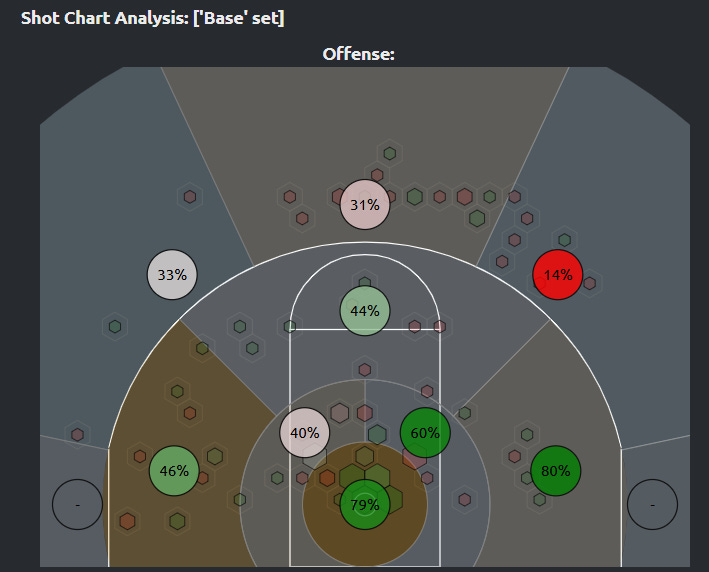
Creativity is often my vocal point when evaluating offensive skillsets and how they might translate to the NBA. That’s where Page immediately stood out. He’s lethal from the midrange. Almost automatic. Perfect high-arcing release and that fadeaway is his signature move. At over 31% over the span of his three-year career, we see decent returns from deep. The sample size is neglible, but what stood out is that he’s not relying on stationary shooting duties by any means. He throws the triple jab to get a better angle in the first possession. Despite the miss, he’s creating the space with his creativity as leverage. That’s a good start.
The long pivot on his jab in the second play is where he get to his signature move. He’s selling the drive while elevating quickly for his jumper. That’s skill. And if it’s not broke, don’t fix it. He continues to fall back to that midrange shot, showing good efficiency so far this season. The other side of the coin is that from three, he’s taking a bit too much time to set his feet. The third play shows an example of him correcting his feet a second after he caught the pass above the break, leading to the blocked shot. He needs to get more comfortable and more consistent with the speed of preparing his shot. The midrange comfort shows feasibility. But we need a higher volume from three as he’s been under two threes per game for back-to-back-to-back years now.
Creation out of post-ups
On the contrary, the interior game is very promising. Page is actively gaining positioninig advantages by posting up and being physical before the entry pass arrives. The first play shows him gaining advantage, using his hips smoothly, lowering the head and ducking inside the lane. He had a good last step, but unbalanced on the reverse layup. He’s at 77.9% at the rim on the season, and that excludes the two dunks he’s averaging per game. That’s elite efficiency. The touch around the rim is tremendous, and very much feasible to translate. He’s comfortable over both shoulders and has the offensive footwork and last step to show for.
The midrange jumper being so crisp is the leverage he’s having when posting up. The second play shows an example. While I’m focusing on his misses inside the paint, the tunnel vision gets in his way at times. The third play has him unbalanced and that’s where he has to pass out of the paint in these sequences. The dedication to score is admirable, but not feasible to sustain high efficiency numbers around the rim. What convinced me is how Page is very tough and aggressive in punishing mismatches. The fourth and fifth plays below show examples against visibly weaker forwards as his assignment. He’s continuing to bring the physicality to them and that natural toughness with crisp advantage creation is the differentiator among his peers. The value out of post-ups with the returns being sustainable makes this part of his game a value riser.
Slashing and making plays out of closeouts
Looking at Page’s finishing inside the lane, there’s a consistent trend of him considering his move after he catches the ball. It’s mostly jabs to win time and punish defenders if they bite. But that’s easily detectable for NBA scouting reports on what teams need to focus on with him. The flashes are high, but there are some fundamental mistakes so far this year as well. Page often settles for shots and that’s absurd in seeing how efficient he is, which makes it even more promising how good he can become when his shot selection improves.
The first two plays are forced, and that’s where he has to break his habit and prioritize passing up on bad looks for a potentially good one for his teammate. He’s a good ball-mover and has the leverage to demand tight coverage or doubles, but as a scorer it hasn’t led to his advantage yet. The third play below is a clear example why every NBA forward has to kick the ball out above the break after getting his feet in the paint with help committing heavily as well.
Therefore, the scoring potential doesn’t match the reality. Page has no issues in getting separation and desired angles, but he doesn’t execute the right angles and often settles. That’s the main area of focus to grow into a power four creator from the perimeter, mainly in closeouts as the downhill drives and decent handles show good first signs.
Passing, ball-moving, and playmaking
Regardless, the ball security and skill as a ball-mover are very promising. At 36 assists to 16 turnovers so far this season, the under-9% turnover rate is remarkable. Page demands doubles and early help while taking good care of the ball. That’s a valuable combination for a forward. He’s a natural playmaker and passer when he’s seeking to be one. The first play shows a perfect example. Great immediate paint touch after the entry pass. He sees the help ocming in and hits the outside bullet pass with precision to the corner for the wide-open three. He’s also focusing on angles and not dropping passes off. The second play shows the bounce pass but he’s hitting it in a way where the recipient can immediately throw in the hip for the finish on the spin.
That’s helping him as a handoff mover as well. Puts the ball out wide while he’s heavily posting up to create separation for the ball handler as well. That’s the value NBA teams seek as we see more and more handoff actions being ran by forwards. The common denominator is need for good screening, and that’s where Page has been showing the right things this season. It’s very much feasible he’ll be a reliable ball-mover and creator for others as a quick decision-maker with the ball in his hands. The make or break in this scenario is improving his shot selection and prioritizing passing a lot more. That’s an area of focus for NBA scouts for the second half of his junior year at Northwestern.
NBA Draft Projection
Based on the strengths and areas of development as mentioned above, I project Arrinten Page to be a draftable prospect in the 2026 NBA Draft. Most likely a second-rounder after the 45th pick in the best case. The main reason I’m not fully convinced is the lack of true consistent decisions being made on defense. He’s reactionary, the game goes too fast for him often and the habits of helping early and being a below-average defender in the pick-and-roll bring challenges in putting him on the floor.
Regardless, the offensive value is a clear value riser on his end. That puts me in a situation where I’d rather see Page use his last year of eligibility to fully ensure playing 1,000+ minutes and giving more valuable sample size before following the route via Portsmouth Invitational. Him not seeing the floor much in his years as a underclassman has hurt his development. He’s making up for lost time this year, and frankly, it’s been a situation where he’s putting his name on consensus boards lately. That’s where I feel improvement is imminent and would prefer Page focusing on the 2027 NBA Draft instead.
At over 275 (!) articles in 3 years, Ersin’s NBA Draft Newsletter is your go-to for draft content. Make sure you subscribe for much more!
This scouting report is incredibly thorough and nuanced. The observationabout Page's tunnel vision on pick-and-roll defense kinda reveals the make-or-break issue for tweeners at the next level - all the offensive skill in the world won't matter if teams exploit that one defensive tendency for 48 minutes. I watched him against Ohio State last week and that exact pattern showed up repeatedly, butdidn't realize it was systemic until reading this.